Ascent
In one sentence: a concept musical about a woman who improves herself to death.
How did it come about?
Ascent (2018) had a short season as part of the Melbourne Fringe Festival at one of Melbourne’s leading homes of independent theatre, Theatre Works, on September 28, 29 and 30, 2018. The initial concept for the work emerged whilst undertaking an informal writing project and was subsequently fleshed out over a series of independent writing sessions, group workshops and rehearsals throughout 2018. The workshops took place with a group of actors with whom I had been doing some experimental physical and vocal training. The final cast who performed the show consisted of Marty Alix, Jordan Barr, Kala Gare, Willow Sizer and Jessica Vellucci. This casting reflected an intuitive attention towards intersectional-feminism, as some of these performers identified as queer and all but Marty identified as female (he identified as a queer man of colour). The music and sound was composed by my frequent collaborator, Imogen Cygler.
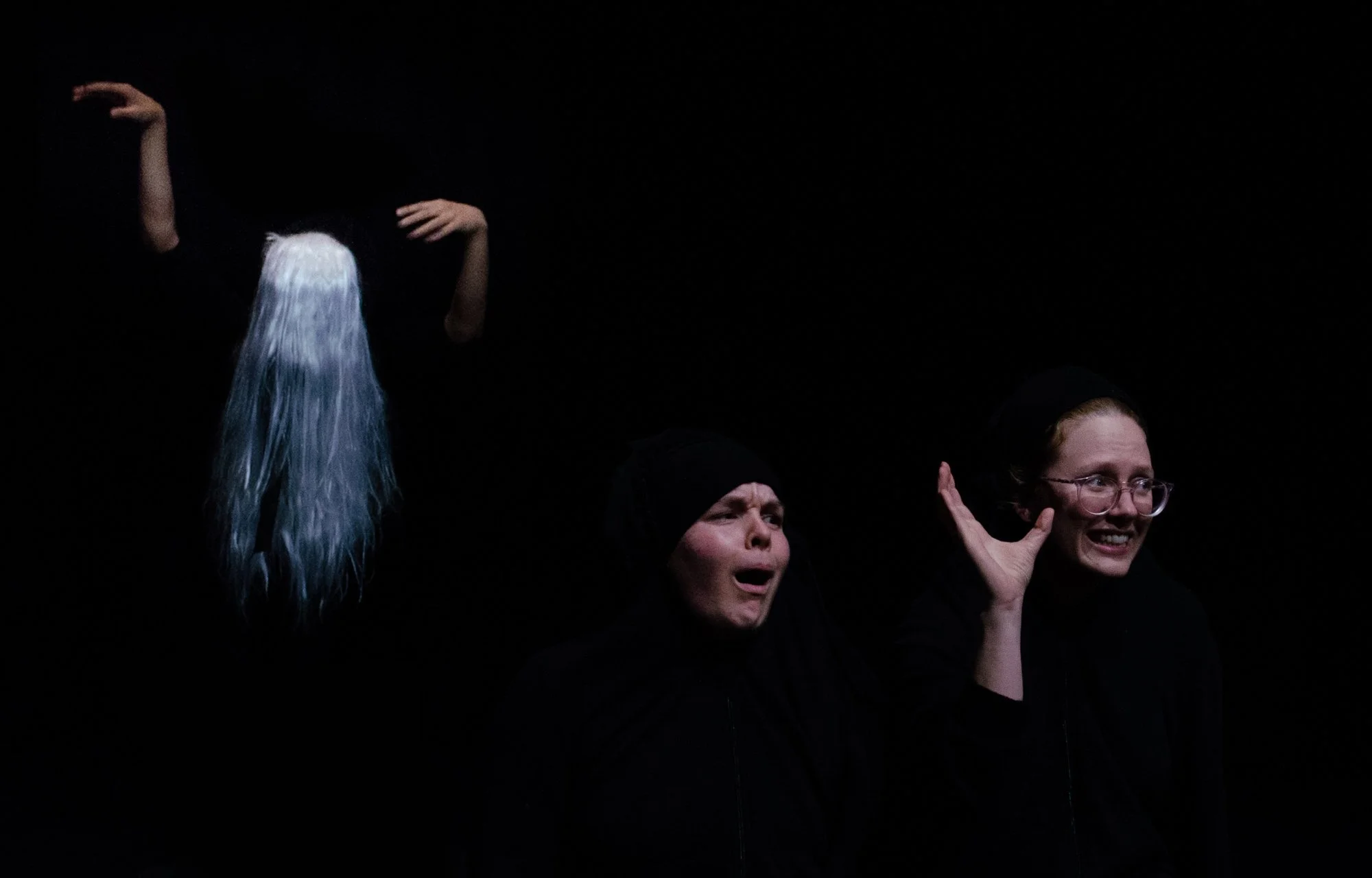
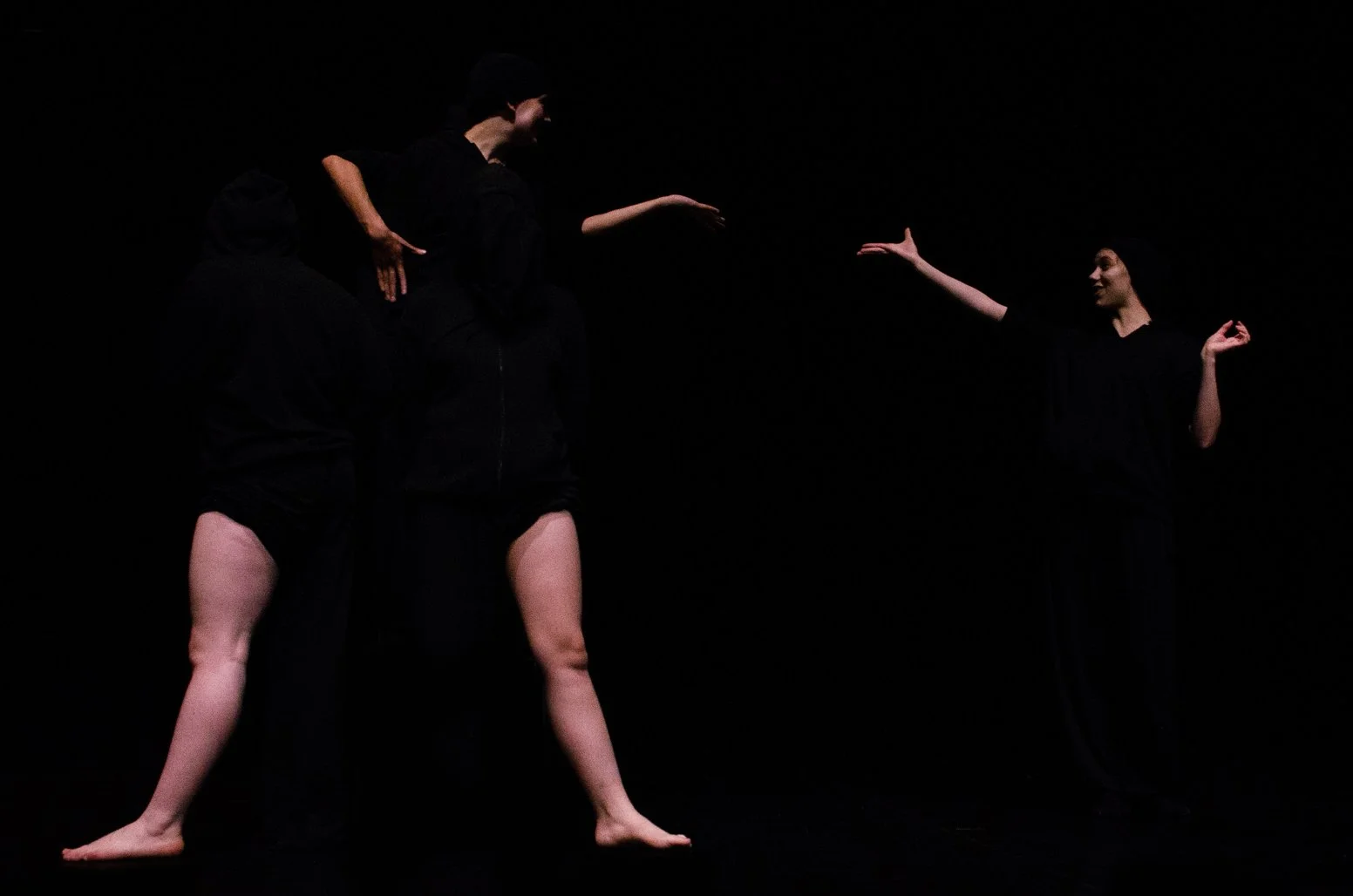
Ascent is where I started to create the theatre I had dreamt of but never been able to execute previously. I was inspired by Dimitris Papaioannou’s (2017) work The Great Tamer, where he similarly has performers strategically reveal body parts to create fragmented images that give the illusion of one unified, yet fractured and disproportionate body and needed to experiment with bodies in this simple, yet totally alien way.
Though Ascent has a simple storyline, I consider the work a concept musical with a Composed Theatre dramaturgical process. This sounds so neat — it has only been through the process of deep excavation and reflection and academic reading and framing that I can actually describe it as such. Ascent in many ways was the start of a new era for Citizen Theatre and for to assert a new style of practice: feminist music theatre maker - one who writes, directs, choreographs but not in any neat way, in collaboration with other artists.
The musical explores the concept of gendered ‘self improvement’ as it relates to the embodied social ideal for women. Throughout the show we follow a woman listed in the script as ‘B’ as she goes from appointment to appointment, hoping the next procedure will help her feel “forever fresh.” As each body part is ‘improved’, it disappears for the audience. For instance, when she undergoes a pedicure, her toes fly away from her into the black void as the nail polish has its final coat. The same goes for a haircut – as hair is snipped away, it flies off. In this story every inch of her body is changed until there is nothing left - literally, the body parts all fly away scene by scene leaving only a voice in the darkness by the end. This theatrical metaphor suggests that the ambition to attain the social ideal necessitates giving up some (if not all) of yourself. When these ‘discarded’ body parts fly away, they find a new life with the other discarded body parts. Throughout a series of interludes the parts find each other and by the end of the show, they have created a celebratory, utopian community where they are able to express their individuality, their agency, their freedom. Inspired by the types of female characters I had seen in musicals and Jean Kilbourne’s (2014) observation that we are accustomed in Americanised cultures to frequently see disembodied, female body parts in an objectified, problematic way, in Ascent I wanted to explore a way of thinking about individual female body parts that reclaimed their intelligence, agency and creativity. These parts discovered they could fly, dance and find their own individual ways of relating to space.
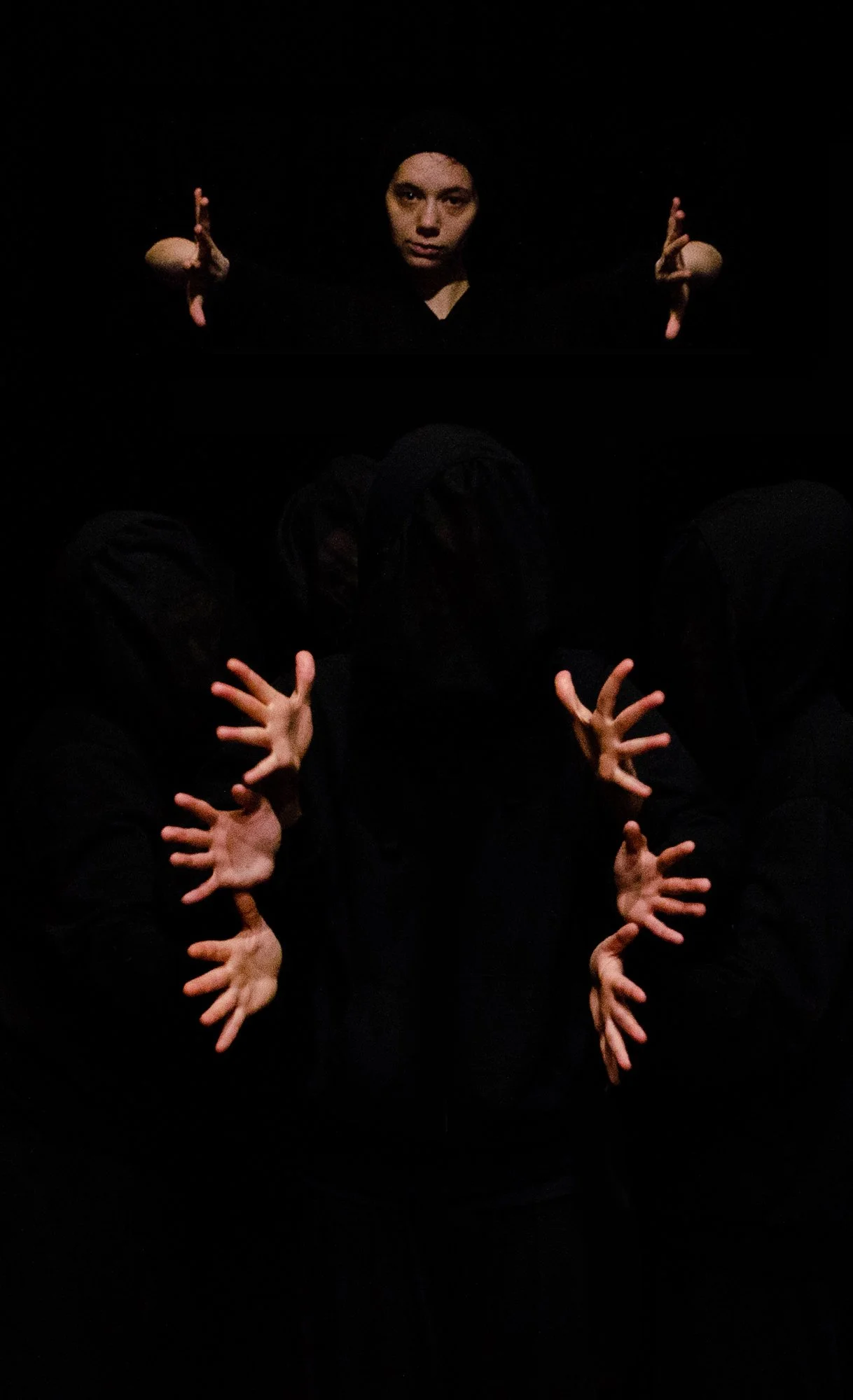
Thinking back on the process, a few things have resonated as significant and relevant to my broader practice. There was music and songs, but it was not a conventional book musical, despite referencing conventional musical theatre tropes. It also looked different - aesthetically, it felt more avant-garde than commercial. Throughout the creation of the work, I was acutely aware of the ways bodies and body parts were being framed and consciously tried to create moments for body parts to move and be part of visual, musicalised choreography, presenting them in surprising, unexpected or unusual ways. The final scene - the epilogue - along with the interludes, were written quite late in the process, and came out of a need to have the show end with something hopeful, something utopian.
I created this work in response to the problematic representations of women in music theatre I was noticing, but also because as the work developed it held a focus on issues concerning the position and representation of women in music theatre, as well as featuring many dramaturgical and theoretical notions that have come from feminist theorising of theatre practice.
To read more about Ascent, you can take a look at my PhD Dissertation.
“An amazing experimental fusion of sight and sound!” — Fiona Georgiou, Stage Whispers
Show info
Writer/Director/Producer: Jayde Kirchert
Composer: Imogen Cygler
Visual Design Collaborator/Graphic Design/Producer: Stu Brown
Lighting Designer: Ashleigh Barnett
Stage Manager/Operator: Sophie Andrew
Social Media Coordinator/Producing Assistant: Steph Clare-Cover
Publicist: Sassy Red PR
Cast: Marty Alix, Jordan Barr, Kala Gare, Willow Sizer, Jessica Velluci
For more images, videos and info visit the Citizen Theatre website.
Image credits Stu Brown