Jayde Kirchert is a theatre writer, director, dramaturge and academic
based in Melbourne.
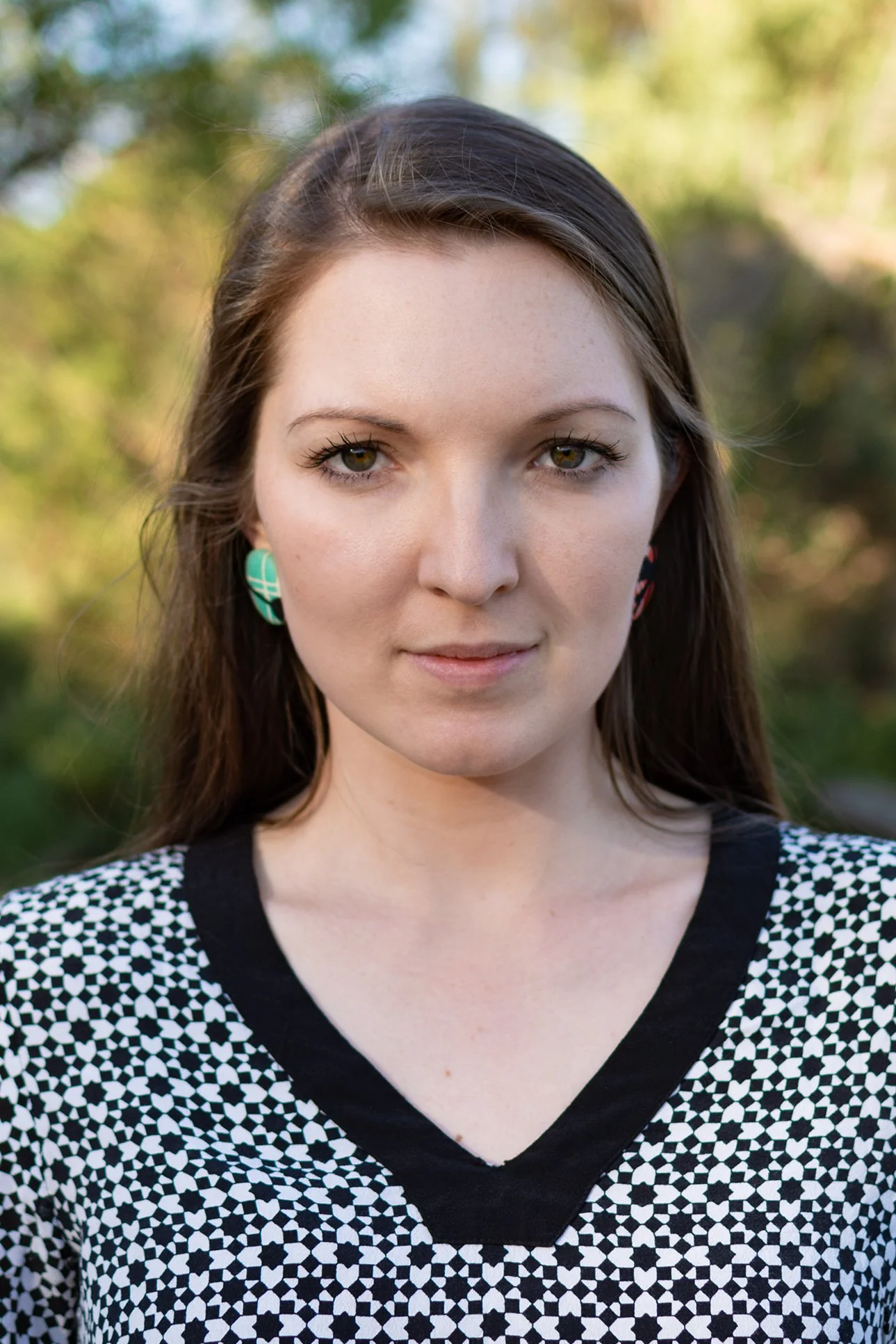
The artistic work I make is for live theatre. I have worked across a range of genres and theatrical forms including musical theatre, experimental music theatre and plays with songs, dramatic plays, comedic plays, physical theatre, movement and dance, immersive experiences, devised theatre, cabaret, one person shows… I used to think it was a problem that I was constantly changing the form or genre I was working in, but I now see it as a strength, because it has helped me to realise my artistic voice, clarify my mission as an artist and simultaneously balance bravery with humility when approaching a new form or style — or indeed any project.
No matter how the work is materialising, the central concerns that anchor my work can all be traced back to my endless fascination with the lived experience of being a body and the political question of what a body can do. Thus, my body and the way I identify with and choose to express myself through it, shapes the specific concerns that present themselves in my work. An intersectional feminism drives and shapes my choices as a Caucasian, cis-gender, heterosexual woman and mother. My feminism is inspired by scholar Jill Dolan’s suggestion that feminism “offers a transformative politics of hope so that we can imagine, together, a better, more equitable future for us all.” I like to think of intersectional feminism as a net — an analogy offered by scholar Mimi Marinucci. The more layers we can add to the net, the more biases we can catch. This means I’m trying to think within and beyond my lived experience to imagine the ways gender intersects with race, sexuality, ability, class and more. This doesn’t mean I catch everything, but I aim to remain open, receptive, conscious and humble.
-
I started a theatre company, Citizen Theatre, back in 2013 so I would have a platform to practice directing. That platform has now become an established contributor to the independent Melbourne theatre scene through which I continue to experiment, push and play in a range of forms, working with many talented collaborators. The work I make with my Citizens always asks me to dig deeper in an attempt to bring to life the worlds living in my brain and bodily imagination. Making new work has therefore become the focus of Citizen Theatre. I have noticed a pattern with my artistic direction, that I tend to create the opposite of what I just made each time — a text heavy work is often followed up with a physically based work, followed by a drama, and so on. I liken this process to holding a diamond up to the sun and turning it slowly, to see how the light refracts through each and every angle. In seeing the entire diamond slowly, I learn more about its wholeness, its lessons and its beauty.
-
As a director, I work with existing texts but frequently interpret both my own new writing and help with the dramaturgical process of other writers’ new works; often I take on the dual role of director and dramaturge when I’m engaged with a new work. No matter the role, I relish new work development: trying to understand the puzzle, zooming in and out, back and forth, aiming to arrive at the most fruitful questions to crack open the story and its full potential. The stories I believe I serve best are ones where questions about body and power or feminist concerns are at the forefront. I also have a deep understanding of musicals and how they work dramaturgically, culturally and historically, due to my teaching practice at VCA. New musicals are next level puzzles — complicated, but thrilling when the story is a meaty one.
I also enjoy applying an intersectional feminist lens to interpreting existing works. A highlight was directing Sweet Charity for VCA Music Theatre, where I applied an intersectional feminist lens to not only the casting, but the entire process of interpreting the classic musical with the 3rd year students. As director and academic Sherrill Gow suggests, casting is the first step in a series of choices that feed into the entire realisation of a production. I see this process of feminist interpretation as a process of re-orientation (inspired by scholar Sara Ahmed’s book Queer Phenomenology) — a layered process, that takes time. The rewards are invigorating and for me, this work is essential if we are to continue to invest in the canon of problematic musical theatre repertoire.
-
As a writer, I believe my challenge is to offer the way I see the world — which I have come to realise tends to be quite different to the way many people see and experience the world — and find ways of that speaking to an audience. It’s no good making work for yourself alone, you have to find ways of helping that resonate. I started with making work for people similar to me, but as my skills improve and I gain more and more experience, I am trying to include a broader audience in my mind as I write. I usually write with music, musicality or songs lyrics in mind, but I do not compose. I leave that to the professional composers who I adore working with — primarily Imogen Cygler, Peter Rutherford and more recently Erin McKellar (also loved working with Anthony Lyons on Mara KORPER). Music and sound always play a substantial role in any work I am creating. I have always felt music to cut through, to speak to the visceral, subconscious parts of our human experience.
-
My research practice has really helped me with trying to connect my work with broader audiences. Undertaking a PhD has forced me to slow down and be really specific and clear about exactly what I’m trying to say, how I’m trying to say it, who has come before me, what the context is. My area of research focus is concerned with how to write feminist music theatre. This research occurs through theory and practice, which means I am writing feminist musicals that aims for broad appeal. The questions I am trying to answer are: is that possible? If so, how does one do it? If I think back to my core question of what can a body do, my research looks at what female bodies have historically been permitted to do in musicals and proposes dramaturgical interventions that actively enable female bodies to do more: to propose possibilities for what they could do.
-
In my teaching practice, the questions shift to “what story is the body telling?”, “what (traditionally) has this body been able to do?” and, perhaps most importantly, “what could this body do?” I aim to ground my students’ understanding of their developing artistry in what has come before them, what we read or get from what they embody (inspired by Maude Davey) and what aspirations or visions they have for their artistic development in the future. Often these questions demand rigorous and challenging conversations about barriers that might currently exist and dreaming up ways we can navigate or challenge these things in practice. In the studio I believe my role is to create conditions for students to do their job of learning and become experts in their bodies (since acting is an embodied practice).
My teaching practice also incorporates more traditional lecturing in contextual and socio-cultural studies concerning music theatre and performance. In this space, I see myself as more of a facilitator who shares what I know, but tries to inspire the student to see themselves as having an active role as the learner, so they can feel empowered to share their perspectives and develop their point of view.
The other area of my practice which is still quite new and developing is around consent, boundaries and intimacy. After completing some training in this field, I share this evolving knowledge with my students, collaborators and colleagues across my practice with the aim of holding spaces that promote consensual, responsible and professional working practices.
-
Since becoming a mother, my questions around what a body can do have only intensified in their complexity and wonder. I don’t remember having many — if any — conversations over the years with women artists about birth or love (until I was visibly pregnant), possibly because, as I have discovered, unless you’ve had a child it is hard to convey anything of the experience that comes close to the lived reality. But it has opened up the questions I am now interested in as an artist. Pregnancy and giving birth was truly was a profound experience that deepened my love of my body and its capabilities. The intensity and richness with which I now encounter my emotional life is such that I can feel myself becoming a more attuned, sensitive and humble artist as my son teaches me about learning, the nature of creative expression, the nature of creation and the simple and enveloping joy of pure love, daily. He has also turned me into a morning person. Such is the power of love.
-
Writers that have had a particularly deep resonance with me include (but not limited to) bell hooks, Judith Butler, Sara Ahmed, Jill Dolan, Franz Kafka, George Orwell, David Whyte, Anne Summers, Caroline Myss. Artists that I draw inspiration from include (but not limited to) Marina Abramovic, Anne Bogart, Katie Mitchell, Dimitris Papaioannou, William Shakespeare, Henrik Ibsen, Stephen Sondheim, Hal Prince, Lin-Manuel Miranda, Robert Wilson, Samuel Beckett, Bertolt Brecht as well as local heroes Maude Davey, Susie Dee, Kate Mulvaney, Declan Greene, Sarah Goodes, Stephanie Lake and many more — too many to list.